The Best Diving in the Philippines Month by Month
· Resources · By Scuba Journal
Thresher sharks, whale sharks, mantas, sardines and tiny critters: where to dive in the Philippines in every month of the year.
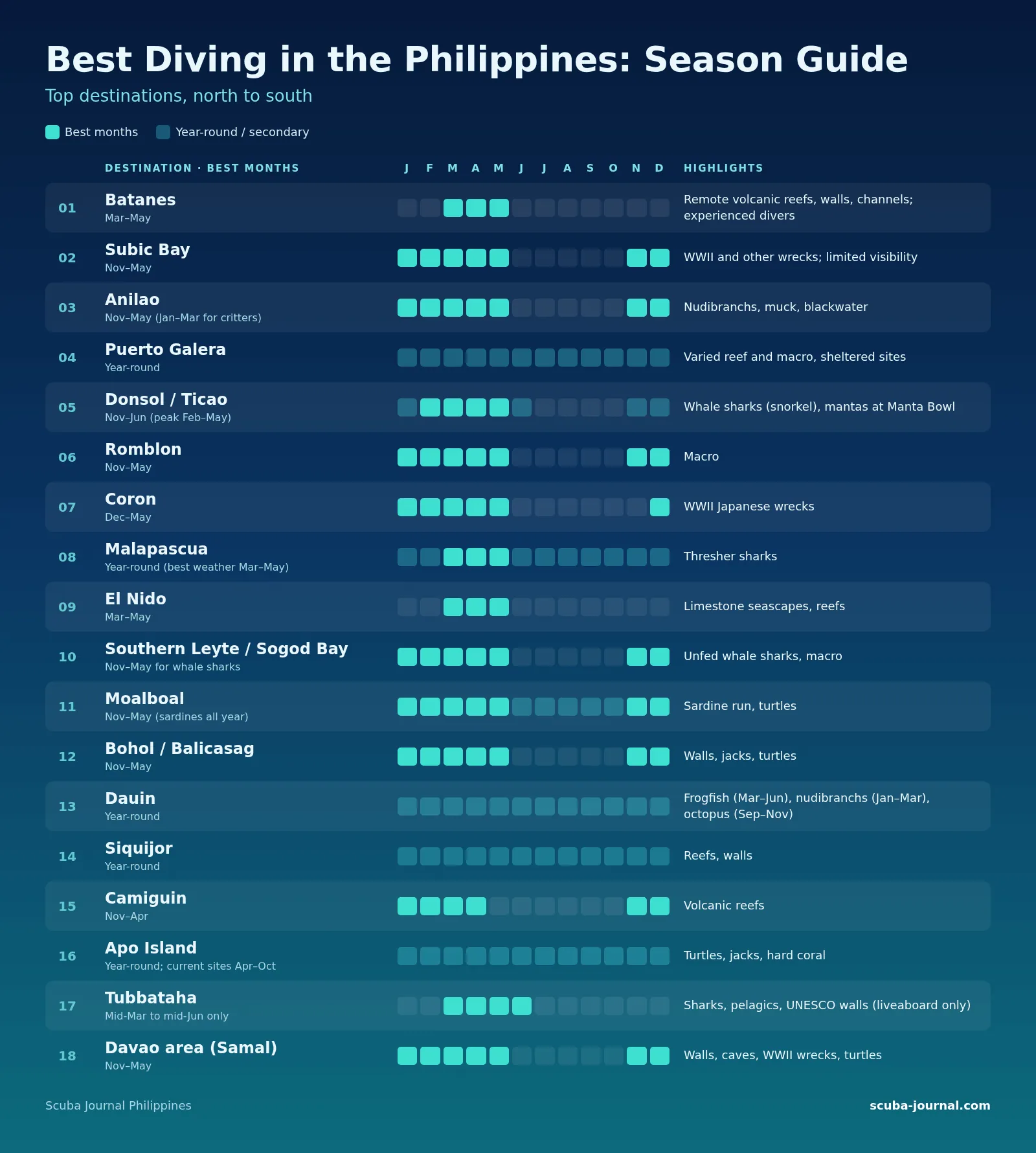
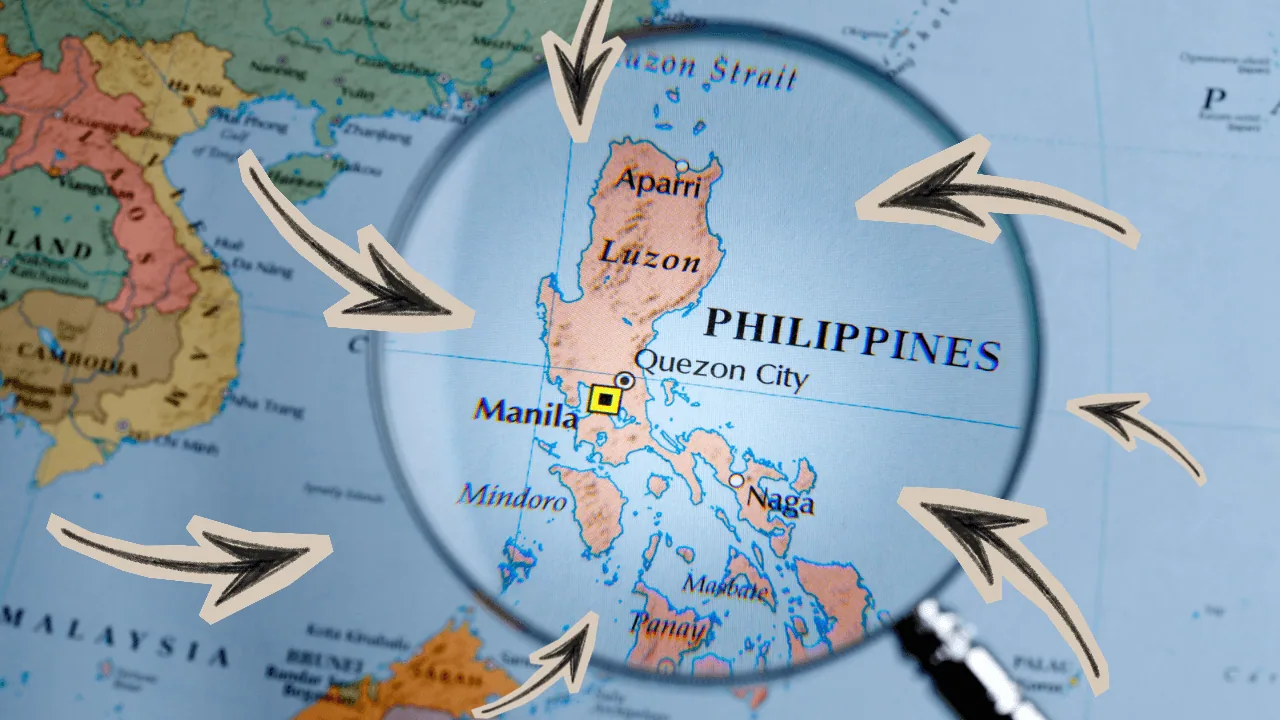
Ask ten Filipino dive guides about the "best season" and you'll get ten answers, each one right for that guide's own stretch of coast. The Philippines has more than 7,000 islands spread over a long north–south chain, so "good conditions" depend on where you are.
The weather follows two monsoons. The amihan, or northeast monsoon, blows from about November to April. It brings cooler, drier air, and for much of the country this is the dry season, when most of the classic dive seasons fall. The habagat, or southwest monsoon, runs from about June to October and brings rain and rougher water to west-facing coasts. Typhoons can form in almost any month but are most likely in the second half of the year. They hit the north and east hardest, and Mindanao sees far fewer. May, and to a lesser extent October and November, are changeover months, when the winds drop and many coasts go flat.
Another thing to consider about this article is that it only takes into account weather and critter seasons. For example, you can dive year-round in Dauin, and it is definitely one of the luckiest locations in the Philippines' dive destinations when it comes to typhoons (when most of the rest of the country is getting rocked, they are still diving). However, even though there are wet and dry times, some divers still prefer to come when there are fewer tourists.
You're getting wet anyway, so who cares about a little rain if it means having sites to yourself?
Geography matters as much as the calendar. Plenty of areas have a sheltered side for each monsoon, so most destinations below can be dived all year. The months listed are when each place is at its best. Weather varies from year to year, and El Niño and La Niña years can upset any pattern, so check with your operator before booking.
Within each month, destinations run north to south.
January
- Anilao. The cool-water peak for critters. Water drops to about 24–26°C, and local guides rate January to March as the best time for blackwater and rare finds. Bring a 5mm suit.
- Donsol and Ticao. Whale shark season (November to June) is under way, and the mantas at Manta Bowl in Ticao Pass are coming into their best window.
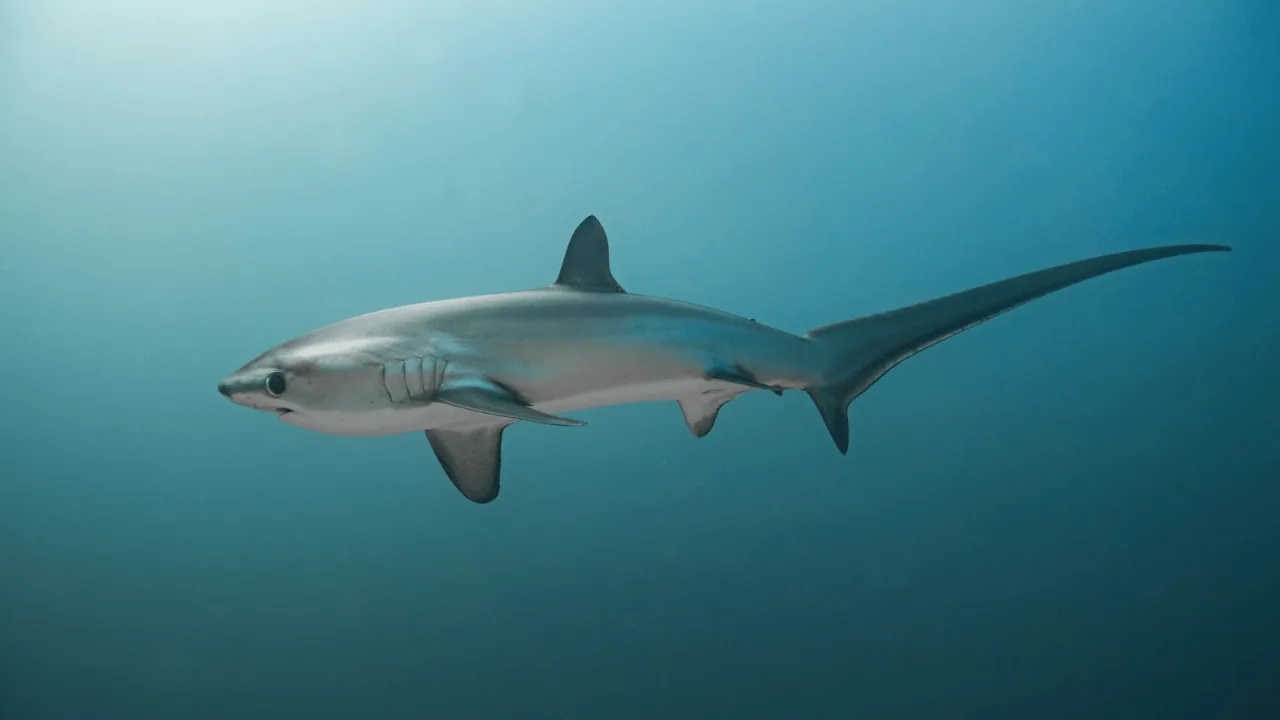
- Malapascua. Thresher sharks are seen year-round. Operators say January to June usually brings good weather, with January and February the coolest water.
- Southern Leyte (Sogod Bay). Whale shark season. The animals feed naturally on plankton and are not fed by people.
- Dauin and Apo Island. Nudibranchs are at their peak, according to local operators. Water is around 26–27°C.
- Davao area (Samal Island). November to May is the prime window for Samal's walls, caves and WWII wrecks.
February
- Anilao. Critter and blackwater season continues.
- Donsol and Ticao. Peak whale shark months begin; researchers record a February to May peak at Donsol.
- Malapascua. Threshers, and the cool water continues.
- Moalboal. The famous sardine school at Panagsama stays all year, and the dry season brings calmer, clearer water.
- Southern Leyte. Whale sharks are present.
- Dauin. Ghost pipefish season starts, frogfish numbers begin to build, and nudibranch season is still going.
- Davao area. Prime season.
March
March is when the whole country starts to look good.
- Batanes. The short calm-sea window opens. March to May brings the flattest seas, the warmest water (26–28°C) and 20–30 m visibility on good days. Currents can be strong and there's no hyperbaric chamber in the province, so this is a trip for experienced divers.
- Anilao. Excellent for macro.
- Donsol and Ticao. Peak whale shark and manta season.
- Coron. Dry-season wreck diving; some sources say March to May gives the clearest water on the wrecks.
- El Nido. The calm-water season begins.
- Malapascua. Operators say March to May has the best weather of the year.
- Southern Leyte. One long-established local operator calls March the best month for whale sharks, with better visibility.
- Dauin and Apo Island. The start of peak frogfish season, with ghost pipefish still around. Local operators see the most passing whale sharks in March and April, though sightings are never guaranteed.
- Tubbataha. The liveaboard season opens around mid-March. The park can only be visited from about mid-March to mid-June, when the Sulu Sea is calm enough for the crossing from Puerto Princesa.
April
Arguably the strongest month of the year, with calm seas almost everywhere.
- Batanes. Peak season.
- Anilao. Warming water and the best visibility. Resorts get busy, especially over Holy Week, so book early.
- Donsol and Ticao. Peak whale sharks; the highest single-month count in the Donsol research came in an April.
- Coron and El Nido. Settled dry-season conditions.
- Malapascua. Best weather for the threshers.
- Moalboal and Bohol (Balicasag). Calm and clear.
- Southern Leyte. Whale sharks are still present.
- Dauin and Apo Island. Usually the driest month, with peak frogfish season. Apo's current sites, such as Mamsa Point, normally hit their best season from about April.
- Tubbataha. Many operators call April the most reliable month for flat crossings.
May
- Batanes. The last month of the calm window.
- Anilao. Warmest water, around 28–30°C.
- Donsol and Ticao. Still in the February to May peak.
- Coron and El Nido. The tail end of the best season.
- Malapascua. Good weather continues.
- Southern Leyte. The last weeks of whale shark season; in 2026, Pintuyan ended its interaction season on 1 June.
- Dauin. Warm water, plenty of frogfish, and the last month for ghost pipefish.
- Tubbataha. Peak season. Some operators say May has the warmest water and the best odds of whale sharks.
- Davao area. Last month of the prime window.
June
The habagat arrives, and the map starts to shift.
- Donsol and Ticao. Whale shark season winds down.
- El Nido. Some sources say June and July can still be good, but others disagree, so treat these months as uncertain.
- Southern Leyte. One long-time Padre Burgos operator says June to August is the area's best diving weather, because typhoons usually track further north. The whale sharks are gone, but it's a quiet season for macro on the reefs.
- Dauin, Apo Island and Siquijor. Rain tends to fall at night, and Dauin has a sheltered stretch of coast for each monsoon. June ends the peak frogfish months.
- Tubbataha. Final departures leave in early to mid-June.
July
- Malapascua. Threshers are still there. Weather is more mixed, but local operators say direct typhoon hits are rare.
- Moalboal. The sardines don't leave, though the water can be choppier and less clear.
- Southern Leyte. In the operator-described "summer" window.
- Dauin and Apo Island. Warm water, around 29°C, and many divers skip the wetsuit. Apo's lee-side current sites are in season.
- Davao area. Rated fair rather than prime, but it's the southern region least exposed to typhoons and a reasonable wet-season choice.
August
Usually the toughest month in the north; Anilao guides call it the month with the highest typhoon risk. Head south instead.
- Moalboal. Sardines, conditions permitting.
- Southern Leyte. Operator-reported good season.
- Dauin and Apo Island. Frogfish are still around, though fewer than earlier in the year.
- Davao area. Diveable, with variable currents and visibility.
September
- Malapascua. Operators say August and September can bring bad weather, so plan a backup day.
- Dauin. Octopus and cuttlefish season begins.
- Apo Island. The lee-side current sites are still good.
- Davao area. Diveable.
October
A transition month. Northern sites start to improve, but typhoons are still possible.
- Anilao. Conditions improve towards November.
- Malapascua. Threshers, as always.
- Southern Leyte. Pintuyan's whale shark program has said it reopens in October, though sightings usually pick up from November. Check with the tourism office before you travel.
- Dauin. Peak octopus season.
- Apo Island. Roughly the end of the Mamsa Point season.
November
The amihan returns, and so does the classic dive season.
- Anilao. The best season begins, with fewer crowds than in spring and water around 26–28°C.
- Donsol and Ticao. Whale shark season opens.
- Coron and Romblon. The dry season starts. Romblon, known for its macro, is generally best from November to May.
- Malapascua. Threshers.
- Moalboal and Bohol. Calmer, clearer water returns.
- Southern Leyte. Whale sharks begin to arrive.
- Dauin. The last month of octopus season.
- Camiguin. The November to April season opens.
- Davao area. The prime window begins.
December
- Anilao. A good month, with cooler water on the way.
- Donsol and Ticao. Whale sharks are around, and Ticao's manta window is often given as December to June.
- Coron. Some sources rate December to April as best for the wrecks.
- Malapascua. Operators say October to December can bring more weather than other months.
- Southern Leyte. Whale shark season, though a local operator notes the area's own rainy spell runs from about November to early January.
- Dauin and Siquijor. Water cools to about 26°C by month's end. Christmas and New Year are busy.
- Camiguin and Davao area. Prime season.
Year-round options: Puerto Galera and Subic Bay can both be dived all year. Subic's wrecks are generally best from November to May, though visibility is often limited and drops after rain. Puerto Galera's many sheltered sites make it a dependable choice in almost any month.